The first wave in artificial intelligence showed that computers could understand patterns in language, recognise them and help humans with more complex tasks. A majority of these systems however relied on the sending of data to remote servers for processing, before producing a final result. Cloud computing has assisted AI adoption but it also has its own difficulties, including latency security, infrastructure costs, and developer flexibility.
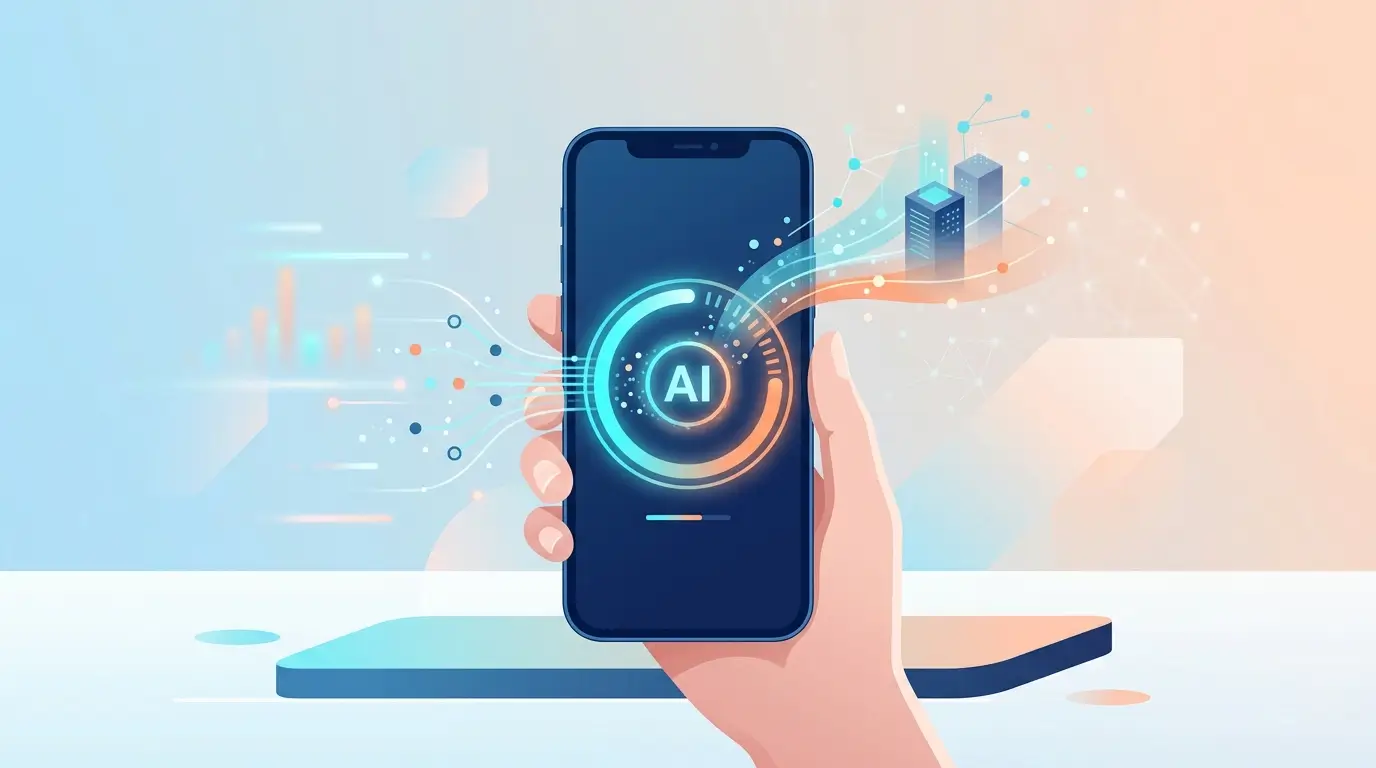
Many engineering teams today are adopting a new approach. They’re no longer treating artificial intelligence as an inaccessible service, instead they are creating platforms that are implemented closer to the point where decisions are being made. This shift is driving the adoption of on-device AI, enabling applications to react faster to changes in the environment, lessen dependence on external infrastructure and ensure more control over sensitive data.
Modern AI requires infrastructure that is designed for real-world work
It’s now obvious to programmers that selecting the right language model to build intelligent software does not suffice. The architecture that is used to support it is vital to its performance. Runtime efficiency, observational observability, deployment flexibility security and scalability all affect the degree to which an AI application succeeds in the production environment.
The increasing complexity has resulted in a growing need for AI agent infrastructures capable of supporting smart decision making as well as autonomous workflows and continuous execution. Rather than relying solely on standard platforms built to handle every situation, businesses prefer to utilize specialized infrastructures specifically designed to meet the specific requirements of their operations.
Thyn’s philosophy was founded on this. Instead of delivering a single AI application The company creates the foundational runtime engines needed to support multiple specialized products while allowing each one to evolve independently. This architectural approach helps engineering teams focus on solving business challenges instead of constantly re-building basic infrastructure.
Better tools help developers build better systems
AI will be embedded in more software and applications, and developers must have access to more than the APIs. They require environments that ease deployment monitoring, testing, and monitoring as well as management of runtime.
Modern AI developer tools increasingly emphasize transparency and control. Developers are seeking to quantify latency, optimize resource usage, and understand how systems perform under heavy workloads.
Thyn invests heavily in these engineering foundations with a focus on measuring system performance rather than broad marketing assertions. Research on runtime deployment strategies, evaluation frameworks, developer experience and observability are regarded as fundamental engineering disciplines that strengthen every product built within its ecosystem.
The use of specialized intelligence is much more effective than platforms that are one size fits all
There is no way that every AI task is exactly the same. Financial trading, cryptographic applications marketing automation, embedded software, and autonomous systems each have their own performance needs, security models and operational limitations.
Thyn creates engines that are tailored to specific domains instead of forcing each application into the same framework. This allows products to be developed independently, but still benefiting from research into architecture and governance.
AI coding agent are starting to follow the same principles. Coding agents of the present, instead of being general-purpose agents, are becoming more specialized. They aid developers to write code, analyze repositories and automate repetitive engineering tasks, but remain integrated into current workflows for development.
Intelligence to help make decisions more informed are made
The future of artificial intelligence is not just about generating information. Effective systems are now capable of reasoning, evaluating the context, make decisions and carry out actions swiftly.
Running intelligence locally offers many advantages to products that require speed, dependability and security. On-device AI reduces dependence on networks and latency. It also allows applications to remain operational even when connectivity is not available. This results in a better user experience, while organizations are able to better manage their infrastructure and data.
The scaleable AI agent architecture makes sure that intelligent system remain observable and maintainable. They also allow them to evolve as requirements change.
Thyn represents this new direction by building the institutional base for intelligent software instead of focusing on individual applications. Thyn’s sophisticated runtime architecture, specialized engine, robust AI developer tool, as well as modern AI code agents are helping shape an environment where AI is more effective, faster, secure, more reliable and ultimately more useful for those who develop the next generation of intelligent devices.